How to Find a Roof Leak Before It Gets Worse?

Learning how to find roof leak problems early matters in Southwestern Idaho, where snow loads, freeze-thaw cycles, ice dams, and wind-driven rain can turn small openings into major damage fast. We see minor gaps expand as water freezes, thaws, and forces materials apart. By spotting interior warning signs, reviewing attic moisture patterns, and assessing exterior transition points from the ground, we can address leaks before they require structural repairs.
Key Takeaways
- Southwestern Idaho’s climate speeds up roof damage, allowing small cracks or flashing gaps to widen during freeze-thaw cycles and storms.
- Interior signs such as ceiling stains, bubbling paint, sagging drywall, musty odors, and active drips often show up before exterior damage becomes visible from the ground.
- Attic inspections during dry conditions help us identify damp insulation, stained decking, rusted nails, mold spotting, or visible daylight through roof boards.
- Most leaks develop at transition points such as flashing, valleys, roof penetrations, and clogged gutter edges rather than in open shingle areas.
- Ongoing leaks, multiple stain areas, storm-related damage, or structural concerns call for professional roof leak detection so we can determine whether repair or replacement makes the most sense.
Act Quickly: Why Roof Leaks Get Worse in Southwestern Idaho’s Climate
Southwestern Idaho’s weather puts steady pressure on roofing systems. Snow loads, freeze-thaw cycles, ice dams, wind-driven rain, and strong spring storms all work against shingles and flashing in Boise, Meridian, Eagle, Kuna, Nampa, Caldwell, Middleton, Mountain Home, McCall, and nearby communities.
Small shingle cracks or minor flashing gaps rarely stay small for long. During freeze-thaw cycles, water seeps into tiny openings, freezes overnight, and expands. That expansion widens cracks and lifts materials. Over time, what began as a hairline opening becomes a clear pathway for water intrusion.
Ice dams create another hidden problem. When melting snow refreezes at the roof edge, it traps water behind it. That water gets forced under shingles and into underlayment layers. By the time stains appear inside, moisture may have been spreading for weeks. This makes roof leak detection more difficult and more urgent.
Spring storms add wind-driven rain that pushes water sideways. Moisture can enter around roof penetrations, flashing joints, and valleys even when shingles look intact from the street.
Understanding how to find roof leak issues early prevents more serious structural damage. Acting fast reduces the risk of soaked insulation, mold growth, damaged framing, and expensive interior repairs. A small repair this month can prevent major reconstruction next season.
Early Interior Warning Signs You Should Never Ignore
Interior symptoms often show up before exterior damage becomes obvious. We always recommend starting inside the home before attempting any outdoor inspection. It’s a safer and more effective first step.
Common water damage roof signs include:
- Brown or yellow ceiling stains that expand after heavy rain or snowmelt often indicate ongoing intrusion. If the stain grows, active moisture remains present.
- Bubbling or peeling paint can signal trapped moisture behind drywall. Drywall tape may also separate at seams when water weakens the surface.
- Sagging drywall or soft areas that feel spongy when gently pressed suggest prolonged exposure. In some cases, the material begins to bow under the weight of trapped water.
- Dripping during storms or rapid snowmelt should never be dismissed as temporary. Active dripping means the roofing system is allowing water in right now.
Moisture doesn’t always drip directly below the entry point. Water can travel along rafters or decking before it drops. That’s why ceiling stains may appear several feet away from the actual roof opening.
Musty odors also matter. A damp, earthy smell in an attic or upper room often points to trapped moisture. These attic leak signs may appear before visible staining becomes severe.
When these water damage roof signs show up, acting quickly makes a difference. Delays allow insulation to saturate, mold to begin forming, and framing to weaken.
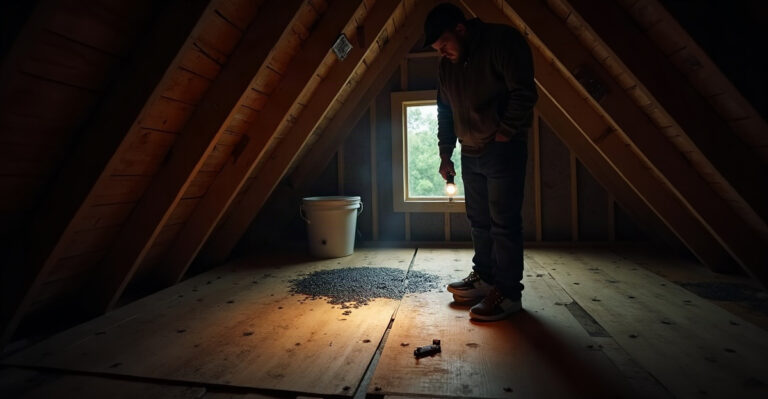
How to Inspect Your Attic for Leak Evidence Safely
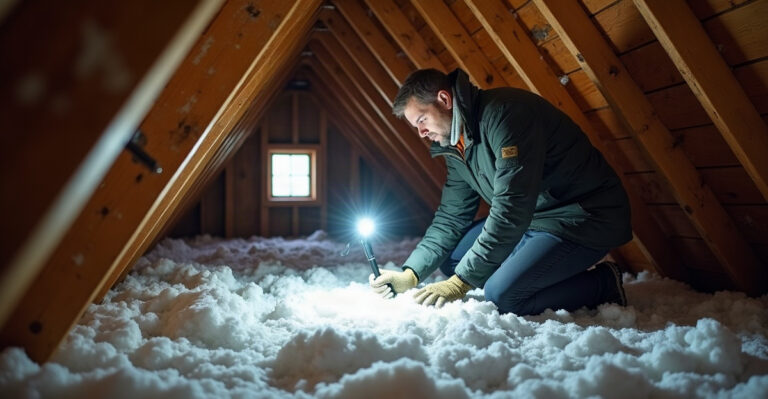
Safety comes first. We recommend inspecting the attic only during dry conditions. Use stable footing, a reliable light source, and step only on framing members or secure platforms. Never step between joists, as drywall cannot support body weight.
To find roof leak evidence in the attic, follow these careful steps:
- Check insulation. Damp or matted insulation feels heavy and compressed. Wet fiberglass loses its loft and thermal performance.
- Inspect the underside of the roof decking. Look for dark staining, glossy wet spots, or warped sheathing panels. Shiny areas can indicate fresh moisture.
- Examine nail tips. Nails protruding through the decking that show rust often signal condensation or previous frost buildup. Rust trails can mark consistent moisture exposure.
- Trace water paths. Follow visible water trails along rafters or trusses. Water often travels along framing members before dripping into living spaces.
Other attic leak signs include mold spotting on wood surfaces, a strong musty odor, or visible daylight shining through roof boards. Any open gap where light passes through can also allow water inside.
Timing matters. Inspecting shortly after a heavy rainstorm or during snowmelt improves visibility. Fresh leaks are easier to trace before materials dry out.
If moisture is widespread or wood sheathing appears warped or soft, it’s time for professional roof leak detection. Structural warping and repeated wetting typically require more than a simple patch.
Common Exterior Sources of Roof Leaks (Ground-Level Evaluation Only)
Climbing onto a roof without training and equipment creates serious risk. Wet, icy, or windy Idaho conditions increase that danger. We recommend evaluating from the ground using binoculars if needed.
From ground level, look for:
- Missing, cracked, or curling shingles
- Exposed nail pops
- Loose or damaged flashing around chimneys and vents
- Skylight edges with separated seals
- Debris buildup in roof valleys
- Areas that appear uneven or sagging
Roof penetrations cause many leaks. Chimneys, plumbing vents, and exhaust vents rely on properly installed flashing. Over time, sealants can crack or metal can separate slightly from the roof surface.
Gutters deserve attention as well. Clogged gutters prevent proper drainage. When water backs up, it can creep under the edge of shingles and soak underlayment layers.
Damaged underlayment remains a hidden contributor. Even if shingles appear intact, compromised underlayment can allow water through once exposed to repeated storms.
Keep in mind that open shingle fields are less likely to leak than transition areas. Most roof leak entry points occur where materials intersect or change direction.
When visible damage appears from the ground, addressing it promptly through professional roof repair helps prevent interior damage from expanding.
When to Call for Professional Roof Leak Detection
Some conditions require experienced evaluation.
Multiple ceiling stains in separate rooms often indicate more than one entry point. Active dripping that persists beyond a single storm suggests the opening remains exposed.
Visible mold, suspected structural decking damage, or leaks following high wind or hail demand prompt inspection. Storm activity can loosen shingles and flashing even if damage isn’t obvious from the street.
Professional roof leak detection offers several advantages. We assess the full roofing system, evaluate flashing integrity, and trace moisture paths within the attic. Instead of guessing, we identify the root source.
Scheduling an inspection doesn’t commit anyone to a full replacement. It simply gives clear information. As a veteran- and family-operated company, we focus on transparent findings and respectful communication. We explain what we see, document problem areas, and outline practical options.
Whether the next step is repair or further monitoring, clarity reduces stress and prevents small issues from becoming larger structural concerns. Homeowners can learn more about our approach on our company website or schedule an inspection through our contact page.
Repair or Replacement: How to Know the Difference
Proper diagnosis determines whether a leak requires targeted repair or a broader solution.
Isolated flashing damage, a handful of missing shingles, or minor storm-related lifting can often be resolved with focused repair work. In these cases, restoring the affected section extends the life of the larger system.
Widespread shingle deterioration, recurring leaks in multiple areas, or significant water damage roof signs usually suggest age-related system failure. If repairs have been performed repeatedly in the same areas, underlying materials may be nearing the end of service life.
Roof age plays an important role. Most asphalt shingle roofs in Idaho have predictable life spans based on installation quality and weather exposure. When a roof approaches that range, investing in major patchwork may offer limited long-term value.
A professional assessment allows homeowners to compare short-term repair costs with long-term replacement planning. Reviewing options side by side brings clarity. For those evaluating budget considerations, we break down pricing factors in our guide on roof replacement cost in Idaho.
When replacement becomes necessary, a structured approach through our roof replacement services or complete roof tear-off services ensures underlying damage is addressed properly before new materials are installed.
The goal remains consistent: protect the home, prevent repeat damage, and make informed decisions based on clear information rather than temporary fixes.